Friday, April 26, 2013

WOOL by Hugh Howey guest review by Alison DeLuca


Hugh Howey originally released Wool as a series of installments, and I can see why the book soared to the top of the charts on Amazon. As well as having what I call “the elusive compulsion factor,” it is written with a gritty realism that mirrors the subject perfectly.


It’s the story of a post-apocalyptic world, where poisonous winds scour the landscape aboveground on Earth; people live an underground silo that extends down for over one hundred stories. 

Couples must wait for someone’s death for a ticket to try for a child; every few years there is a Cleaning, when someone leaves the Silo to go outside and clean the windows, either voluntarily or under punishment. They never return.

Wool begins with a cleaning, as Holston volunteers to go outside a year after his wife made the same request. This sets into action a series of events that end up affecting every story of the Silo and beyond.

The first section is called Holston, and it is all about his experience. The following parts are named after actions and concepts in knitting: Proper Gauge, Casting Off, Unraveling, and feature other characters. 

First up is Jahns, the Mayor of the silo, and it concentrates on her relationship with Marnes, a police officer, as they go to find a replacement for Holston. Their journey to the bottom of the silo introduces other factions in a nice, geographic outline. I felt as I read Proper Gauge I was descending with Jahns and Marnes to the lower section of the silo, meeting IT and Mechanical along the way.

IT holds Bernard, who is unlikeable from the start. Mechanical is the setting for Juliette, or Jules, and she is extremely likeable. In fact, she’s one of the most original characters I’ve met in science fiction.


All the characters interact in a very original, organic way. As an author, I marveled at Howey’s prowess at herding people from one section to another – this can be a very onerous, exhausting task at times. He manages it without any deus ex machina; as the book progressed, I really felt I was living in the Silo.

The book reminded me of the best of Verne and Wells. The gears and engines are described so perfectly, it’s no surprise to learn that Howey worked as a mechanic on ship, servicing engines that were almost as large as the ones Jules works on in Mechanical.


Meanwhile, there is the rise of Bernard, who acquires more and more power and determines to keep Jules from the upper floors of the Silo. Jules herself is perfect – she’s strong and still feminine, but most of all she is incredibly intelligent. I love the way she negotiates her adventures and challenges in the Silo and out of it.

I read a lot of comments on Goodreads and Amazon that the book shouldn’t have been called Wool. I think there is a definite reason for the title beyond the chapter headings which I won’t mention since it is a major spoiler, but feel free to message me and we can chat about it, if you have read the book.

Finally, Wool appealed to me as a grown-up, neater version of Hunger Games or Divergent. The writing is very simple – and it is in the past tense and third person, hurray! There are no instances of “I go to the mirror and look at my too-big eyes…” – a major turn-off for this reader. 

Not only that, but the plot structure is also very simple – much like the spiral staircase that supports the Silo – simple, but very clever. From that structure, a believable, exciting world blooms and evolves under the ground.

Today's guest reviewer is Alison DeLuca, author of the Crown Phoenix Series of steampunk novels. Alison's review can also be seen on her blog, Fresh Pot of Tea. 

Friday, April 19, 2013

The War of the Flowers by Tad Williams


Today I am revisiting one of my favorite books of the last twenty years, The War of the Flowers by +Tad Williams. Originally published in 2003, I first bought this book the day it was released as a paperback. I've often said I will always buy a book for its cover, and I liked the art so much that I bought the book despite the rather lackluster blurb. The REAL reason I bought this book—Tad Williams has an incredible ability to write a tale that grips the reader and drags them in, blurring the lines between the real and the imagined with his trademark virtuosity.

The Blurb:
Theo Vilmos' life is about to take a real turn for the worse.
He is drawn from his home in Northern California into the parallel world of Faerie, for, unknown to him, he is a pivotal figure in a war between certain of Faerie's powerful lords and the rest of the strange creatures who live in this exotic realm.

My review:
This is a REAL fairy tale.  Theo Vilmos doesn't know it, but he is a changeling. Switched at birth, he suffers from a disconnection from the world of Northern California, always feeling as he lived somehow outside of the rest of society. He is a rock musician, and pours his heart into his music.

His life has somewhat gone to hell, and at the age of thirty he's a washed up rocker reduced to playing with a bunch of young wanabes. His mother (or the woman he'd believed was his mother) is dead, his unborn child has died and his girlfriend blames him for the child's death. 

After his mother's death, Theo discovers a book written by his great-uncle, Eamonn Albert Dowd, among his inheritance. Theo's imagination is fired by the book. He assumes the book is a work of fiction as it describes a character who travels the world and eventually discovers an ancient passage into another world full of fairies and other mythical creatures. He quickly discovers the true nature of his uncle's book as he is rescued from the clutches of an ancient disease-spirit known as an irrha by a small fairy named Applecore.

The World of Faerie is not such a pretty place either. The very rich use the very poor in the most literal sense of the word, with no compassion and no regrets. The powerful houses have long been at war and all of the magic creatures are caught up in it. Fairie suffers from all the blight of the mortal urban world, and then some. Fairies come in a range of humanoid and nonhumanoid forms. The more powerful fairies look like extremely beautiful humans with elvish features and, unlike fairy commoners, lack wings. 

These members of the noble houses are known as Flowers and are divided into several influential families, each named after a different type of flower.

Seven great family houses rule over the rest of the houses: Thornapple, Hellebore, Violet, Lily, Daffodil, Hollyhock and Primrose, but the Violets are now extinct, having been wiped out by an alliance of the other six great houses in the last War of the Flowers. Other prominent families include Daisy and Foxglove. The families are divided into three factions, those who believe that the fairies should coexist with humans, called Creepers, those who believe that humans should be eradicated, called Chokeweeds, and those who are uncertain what to do, called Coextensives.

Passage between the worlds is restricted by the Clover Effect. Each person, human or fairy, has one exemption from the effect; in other words they can only travel once to the other world and then back to their own.

Theo Vilmos is a great character—slightly flawed and rather naïve for a man of 30 years of age. He makes many friends and enemies in a very short space of time. He does stupid things and regrets them. Still, we find ourselves rooting for Theo, and enjoying the ride.

Applecore is a wonderful character. For such a tiny creature, she is full of fire and passion, loyal to a fault and is my favorite character in this tale. She's a gutsy, gritty heroine who also has her flaws.

In The War of the Flowers Tad Williams created a Faerie Land unlike anything you ever read. It’s Faerie on steroids, urban, dirty and nothing is what it seems. This book doesn't get the sort of attention it deserves, in my opinion. The War of the Flowers is the sort of book that people will read twice— I've read it 3 times myself.

So far as I've been able to find, this book is not available for the Kindle, but it is available in paperback.  I know +Tad Williams is NOT an indie, but stretch your wings, readers. Go mainstream for a moment and enjoy the journey! This is the sort of writing with the plot development and world building we indies aspire to. Williams is a master, and it is a nearly physical pleasure to sink into a corner of the sofa with one of his books in hand, and ignore the real world for the day.

Friday, April 12, 2013

A Lesson for the Cyclops, Jeffrey Getzin


Today I am reviewing a novella.  As you know, I normally like my fantasy like I like my heroes—Big, Epic and Gorgeous, but I always make an exception for the work of indie author +JeffreyGetzin. Despite this being a novella, Jeffrey Getzin succeeds on ALL counts! A Lesson for the Cyclops is a wonderful way to spend an evening and it features one of my favorite characters from Getzin’s first novella, Shara and the Haunted Village.

First  I want to say that the cover for this novella is one of the most beautiful covers I have see this year! The cover art is done by the fabulous +Carol Phillips, and is a great example of fantasy art. She also did the fantastic covers for Getzin's 'Shara and the Haunted Village' and 'Prince of Bryanae.'

The Blurb
Maria leads a lonely existence of silent misery. Horribly disfigured, she earns a meager living as a sideshow freak. Her very existence is one of mockery, contempt, and ridicule. She has no hope, no dreams. No future.

But when a dashing swordsman stumbles onto the circus grounds, wounded and feverish, Maria is able to imagine a life beyond the confines of her dreary world. Could a swashbuckling hero ever fall for a freak like her?

My Review
A Lesson for the Cyclops picks up the tale of D'Arbignal, the hero from Getzin's wonderful novella, Shara and the Haunted Village (Bryanae). When the tale opens, our hero finds himself in a bit of a pickle. He manages to extricate himself and stir things up with his usual panache. 

A terribly disfigured woman whose pain and suffering is handled with compassion by the author, a circus with many wonderful minor characters, jealousy, romance and revenge--all combine to make this novella true classic. I must confess, I am a bit in love with D'Arbignal and I am now champing at the bit to get my hands on the next tale of my favorite swordsman.

I want to see D’Arbignal with his own novel!  Mr. Getzin, please write me a story—a nice, loooong, epic saga of D’Arbignal’s adventures!


Friday, April 5, 2013

Dwight Okita, Murakami, and Jellyfish


Today's post is by Alison DeLuca, author of the Crown Phoenix Series and blogger, and was previously posted on Dark Side Book Reviews. She is covering two amazing books: 

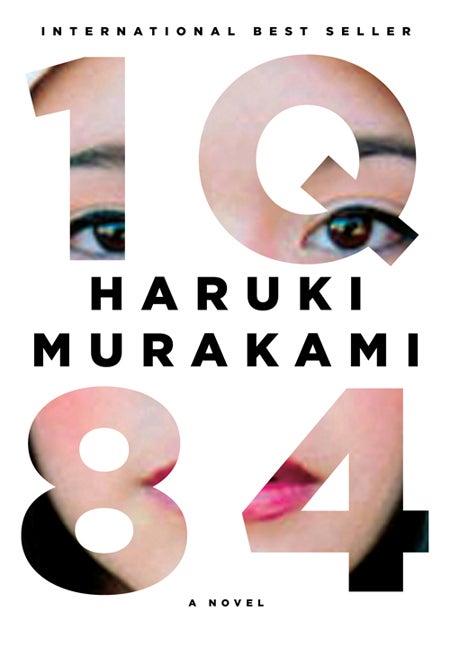
This summer I've had the pleasure to read  1Q84 by Haruki Murakami and The Prospect of My Arrival by Dwight Okita. The books were very different, and yet there was a similarity to their style - a deceptive simplicity, deepening excitement, addictive prose, and a sense of melancholy and wonder throughout.

1Q84 is a doorstop of a book that originally was published in three volumes in Japan. It is perfect for anyone who is looking for a book for autumn, one that will last through quite a few rainy nights. Murakami writes about a woman, Aomame, and a man, Tengo. They go through separate adventures that interact in Murakami's signature mysterious existentialism.


Aomame gets out of a cab one day and climbs down from the highway into a world that has two moons. There she finds that things are a bit off. The world has shifted. In that  new alternate universe, a beautiful young girl called Fuka-Eri writes about Little People. They appear out of a dead goat's mouth and build an Air Chrysalis. There are two moons, and a Town of Cats.


Meanwhile, Tengo is working to polish and publish the manuscript by Fuka-Eri called Air Chrysalis. There are fascinating minor characters, such as the man who leads a powerful cult, a man that Aomame is contracted to kill. There is Ushikawa, the man hired by the cult to find Aomame.  Each of these characters is more than they appear - they unfold, like origami, into balanced people with depth and emotion. 


I am already a huge Murakami fan; Kafka on the Shore is one of my very favorite books. To be able to spend a summer reading a long novel by him was a real gift. And he didn't disappoint - 1Q84 satisfied my delight in urban fantasy, science fiction, action, and wonderful writing.


The Prospect of My Arrival was a different kind of read. It is much shorter, for one thing. I read the book in a few evenings, although in part that was because I simply could not put it down. Okita uses dreamy prose that is reminiscent of Murakami. He pumps up the volume on the science fiction, as the book is about a scientific and moral experiment.


Prospect is a foetus, a baby about to be born. He is given enhanced intelligence and a twenty-year-old body and sent out into the world to see if he wants to be born.


To help him in his decision, he is sent to visit Referrals. The book is the story of those visits on one level, but there is a thread of other plots connecting those stories. There are people who are against the Pre-Born Project and who want to stop it at all costs. There is also a love story between Prospect and Lito, his second referral. Okita manages both deftly, making the first exciting and the second lovely and touching.


I have read some reviews on Amazon about The Prospect of My Arrival that complain about the spare prose. Okita uses short sentences and simple description, but to my mind it is done very artistically. The book is like a Mondrian painting. It seems very straightforward at first glance, but there is a complex structure and design behind the simple sentences. And those short phrases echo the soul of Prospect who is, after all, a foetus. 


In one scene, Prospect meets his mother in the Shedd Aquarium. They talk about his sister, Joyce, in front of one of the tanks of jellyfish. "As they leave this place, jellyfish descend in slow motion like parachutes onto the bright coral reefs below them." This image is echoed in another Referral's home. "Sheer pink curtains flutter from the open windows of the living room. They move like jellyfish in the summer breeze."


The jellyfish encapsulated the book, to my mind. The words move lazily, dreamily, like underwater creatures, and yet they are mesmerizing. The plot and the prose seem so simple, and at the same time they are lovely and complex.


Can you get excited about the story of a foetus who may or may not decide to be born? Oh, yes indeed you can. As I said, I could not put it down, and I had a very sad feeling when the book ended. Luckily, Okita has other books coming out, such as The Hope Store, and I will certainly be purchasing everything by him.


I read Prospect as a Kindle book. Formatting is an art unto itself, and Okita's format is breathtaking. He includes images and chapter headings that make this a joy to read. However, the story was so amazing that I need to get the print version and beg the author to sign it for me. Okita is a name to be watched on the Indie front.


Posted by Alison DeLuca

Friday, March 29, 2013

Land of Nod, The Artifact by Gary Hoover


‘Land of Nod, The Artifact’  by +Gary Hoover is one of those genre-bending tales that sucks you in and soon you are hooked. It is a little bit sci-fi and a lot fantasy. I first read this book in 2011 and recently re-read it while visiting grandchildren. I think it's well worth a second look!


The Blurb:
Jeff Browning has been haunted by terrifying dreams since the mysterious disappearance of his father (a renowned physicist). But when he finds a portal in his father’s office, he must overcome his fears in an attempt to find him.
The portal takes him to another dimension – one populated by fantastic and dangerous creatures and also an advanced society of humans.

As Jeff looks for clues regarding what may have happened to his father, he is accused by some of being a spy while thought by others to be a prophesized figure . . . who may be the key to victory in a developing war.


My Review:
The plot details the adventures of Jeff Browning, a fourteen year old boy who is struggling with the loss of his father. Jeff has dreams that frighten him and he tries to avoid sleep as much as he can. One day he decides to search his late father's locked office, and while he is in there he finds a strange machine with a hole in the center that leads to somewhere else. He climbs into it and embarks on a strange series of adventures, finding that his father may not be dead but may actually be there too, somewhere.

Jeff has mysterious powers that aren't fully explained in this book but they are hinted at, rather strongly, as being more fully explained at a later date. Fortunately, Jeff is taken in by a family, and they help him.  As he begins searching for his father, he is accused by some of being a spy, and is thought by others to be a prophesied figure, 'The Raja' a savior who may be the key to victory in a war that is looming on the horizon.  This is because of the locket which he wears that his father gave him years before.

This world is populated by fantastic and dangerous creatures and also an advanced society of humans. That society, while very different from those on earth, parallels Jeff's earth in many ways. 

Hoover blends science and technology with mysticism and prophecy to create a world that is both familiar and strange.  There are many different issues keeping Jeff from finding his father, from useless politicians whose self-interest outweighs the greater good to a war that he eventually finds himself in the middle of.

The characters are well drawn, and the strange world is also well crafted and visually real. The beasts that Jeff must fight are quite frightening and the battles are very realistic. While this is a great stand-alone tale, Hoover sets you up for the sequel, Land of Nod, The Prophet, quite neatly. This is another good adventure book for readers of all ages. I enjoyed this book immensely and highly recommend it!

My grandson and I will be reading Land of Nod, The Prophet over the summer, and I confess, I've been cheating--I've already begun reading it! What a great series!

Friday, March 22, 2013

Diaries of a Dwarven Rifleman, Michael Tinker Pearce and Linda Pearce


This week we are reviewing "Diaries of a Dwarven Rifleman", co-authored by Michael Tinker Pearce and Linda Pearce. This book is a real departure from the usual run-of-the-mill epic-fantasy dwarves-and-elves style books. Think about Tolkien's dwarves, give them modern weaponry and sit back and watch the fun.

The Blurb:

Engvyr’s father gave up on the miner’s life to move the family back to their ancestral home in the far north. But the journey is fraught with perils the young dwarf has never imagined, and when tragedy casts him in the role of hero, well, what’s a dwarf to do? The events of that fateful journey have shaped and ruled his life, but now Engvyr wants nothing more than to make a place for himself, perhaps settle down and raise a family. But when a new enemy rises in the North he finds himself at the center of the conflict, with not merely the freedom of his people but the fate of all of humanity hanging in the balance… and the habit of heroism is a hard one to break. In Diaries of a Dwarven Rifleman magic, science and technology work hand-in-hand to create a new kind of fantasy world, where the character, life and relationships of an ordinary dwarf can steer the course of history and save a world.


My Review:

Truthfully, I have no idea why I picked this little jewel of a tale up, but it was a good choice. The tale is comprised of many vignettes of Engvyr Gunnarson's life.  Forced by circumstances to leave their home and return to the dwarven homeland, Engvyr's family embarks on an long and perilous trek. The events and losses on that journey shape the adult that the young dwarf becomes, molding him into a reluctant hero.

Engvyr never gives in to the casual brutality that characterizes his society, nor does he allow racism to interfere with his understanding of human nature and the basic underlying fact of the races - that ALL the races evolved from a common root - that of humans, and all share a common humanity. Early on he is taught that despite the radical differences in appearance and widely divergent societal differences, all the races of people want the same basic things: enough food for their children, and a safe place to raise them. 

Engvyr understands that when a society removes the humanity from an enemy ethnic group, it becomes easy to commit the most extreme atrocities against them, all in the name of  whatever cause one is fighting for. Because he understands the underlying truth of this, Engvyr brings compassion to his battles, and a desire to do good.

There is a great deal of Norse mythology woven into this tale, as well as Nordic mores and values. These characters are strong people with great capacities for both love and cruelty. 

For those of you who are weapons purists, you will be happy to note that the weapons Engvyr carries are original and scrupulously designed to be both real and fantastic at the same time. It is apparent that the authors have a true knowledge of guns and knives, and weaponry in general. Indeed, +Michael Tinker Pearce is known as the 'Swordgeek' and regularly blogs and gives podcasts on the subject of swords. 

You can get 'Diaries of a Dwarven Rifleman' for the kindle at amazon.com by clicking on this link: 


All in all, this is an excellent, well written and well thought out book. 

Friday, March 15, 2013

Dark Places, by Shaun Allan

Shaun Allan is one of my favorite, go-to authors when I am in the mood for an off-beat, darkly-humorous book that makes me wish I was an author! (insert lol here.) His most recent book, Dark Places is one of those secret pleasures that I hide away with, and savor every paragraph.

The Blurb:


I am Death. I know who you are...

There is darkness and madness in each of us. We must do battle with our own demons.

But...

What if those demons opened the door in the back of your mind and stepped out. What if they became real? If the night, the shadows, the reflections and Death himself walked among us? And what if they were watching you? Waiting? Thirsting...?

Dark Places. Thirteen stories. Thirteen poems.

Thirteen doorways.


My Review:

Shaun Allan's obsession with all things dark bears strange and frequently hilarious fruit in this compilation of stories interspersed with poems. 

The book opens with the poem "Mmmm," a commentary on life by a man who wishes that he could 'DO' instead of just 'going with the flow' but lethargy owns him--he's unable to make the effort.

The first short tale is  "I am Death".  It details a day in the life of the Grim Reaper. The Grim Reaper has been at his job for quite a while now, and is becoming rather bored with with it. Death writes bad poetry--"To live is to die, To smile is to cry"--and knows in his heart he should stick to his day job and leave poetry to those with, well, a soul.

This book is full of little snippets and jewels of dark prose and self-mocking humor. "This Night", a poem that sheds a little light into the authors own psyche, showing us the anxiety that lurks just below the surface of our precarious modern lives. "This night is safe. This night..."

"Dark Places", a longer tale, details the mental state of a man who finds himself. Literally.

"The Last Dance" is one of the shorter pieces, but is incredibly moving.

"Patient Solitude" details love, loss, two men and living with the memories of one woman's last moments.

All through this book, interspersed with the horror, is the shockingly honest humor that Shaun Allan is famous for, shedding light on our own fears and frailties.

But my FAVORITE tale is the creepy, "House on the Moor." Let's just say it brings a new level to the dangers of dipping into the real estate market.

I was privileged to be an editor on this book, so this review is a bit of nepotism on my part, but I've been a fan of Allan's since I first read his monster-piece, "Sin", a deep, dark novel of one man's madness. It was such a pleasure, to be allowed to work with an author of this caliber. Allan's prose is beautiful and harsh, opening doors into our own psyche we may wish we'd never entered. All in all, this is an excellent book for a cold winter's day, safe by your fire with a cup of cocoa.